Risk management is a critical aspect of project planning and execution. One of the key tools used in risk management is the Risk Register, which helps identify, assess, and prioritize risks that may impact the project. Keeping track of all potential risks in an organized manner is essential for effective risk management.
Using an Excel template for your Risk Register can streamline the process and make it easier to manage risks throughout the project lifecycle. Excel is a widely used tool that offers flexibility and customization options, making it ideal for creating and maintaining a Risk Register.
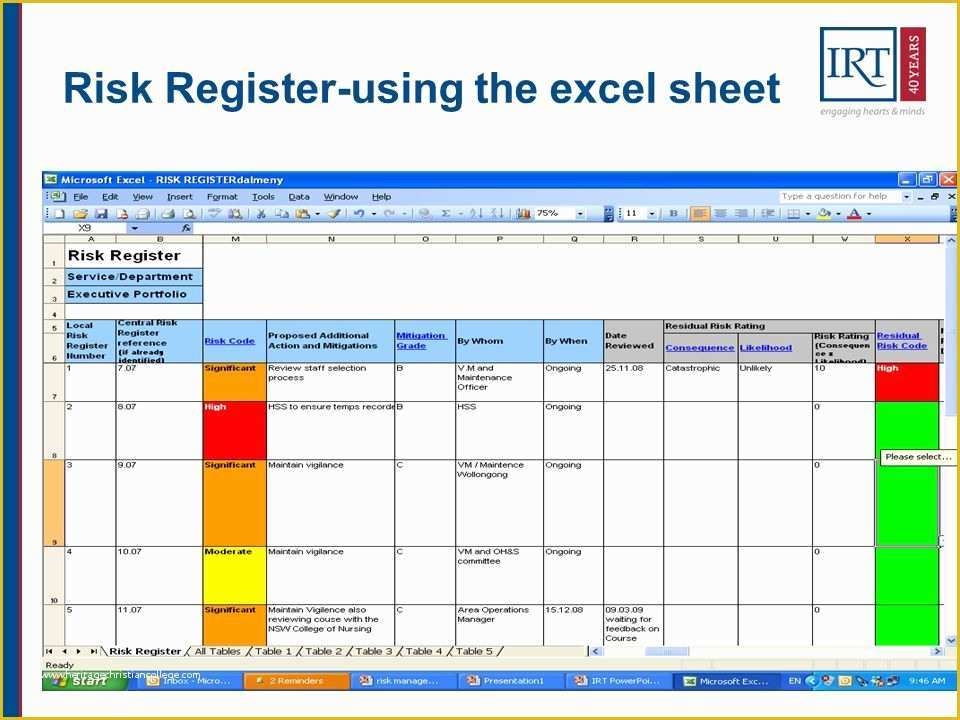 Risk Register Template Excel
Risk Register Template Excel
One of the key benefits of using an Excel template for your Risk Register is the ability to customize it to suit your project’s specific needs. You can easily add columns for risk description, impact, likelihood, mitigation strategy, and status, among other important details. This flexibility allows you to tailor the Risk Register to your project’s unique requirements.
Another advantage of using an Excel template for your Risk Register is the ability to easily update and track risks throughout the project. With Excel’s sorting and filtering capabilities, you can quickly identify high-priority risks and take appropriate actions to mitigate them. This real-time visibility into project risks can help you proactively manage potential issues before they escalate.
Furthermore, Excel templates for Risk Registers often come with built-in formulas and conditional formatting that can help you analyze and visualize risk data more effectively. You can create graphs and charts to represent risk trends, identify patterns, and communicate risk information to stakeholders in a clear and concise manner.
In conclusion, utilizing an Excel template for your Risk Register can greatly improve your project’s risk management process. By customizing the template to fit your project’s specific needs, tracking risks in real-time, and leveraging Excel’s data analysis capabilities, you can effectively identify, assess, and mitigate risks throughout the project lifecycle.