Risk assessment is an essential process for any organization to identify potential risks that could impact its operations. By using a risk assessment template in Excel, businesses can systematically evaluate and prioritize risks to develop effective mitigation strategies.
Excel is a popular tool for risk assessment due to its flexibility and ease of use. With a well-designed template, organizations can customize the assessment process to fit their specific needs and requirements.
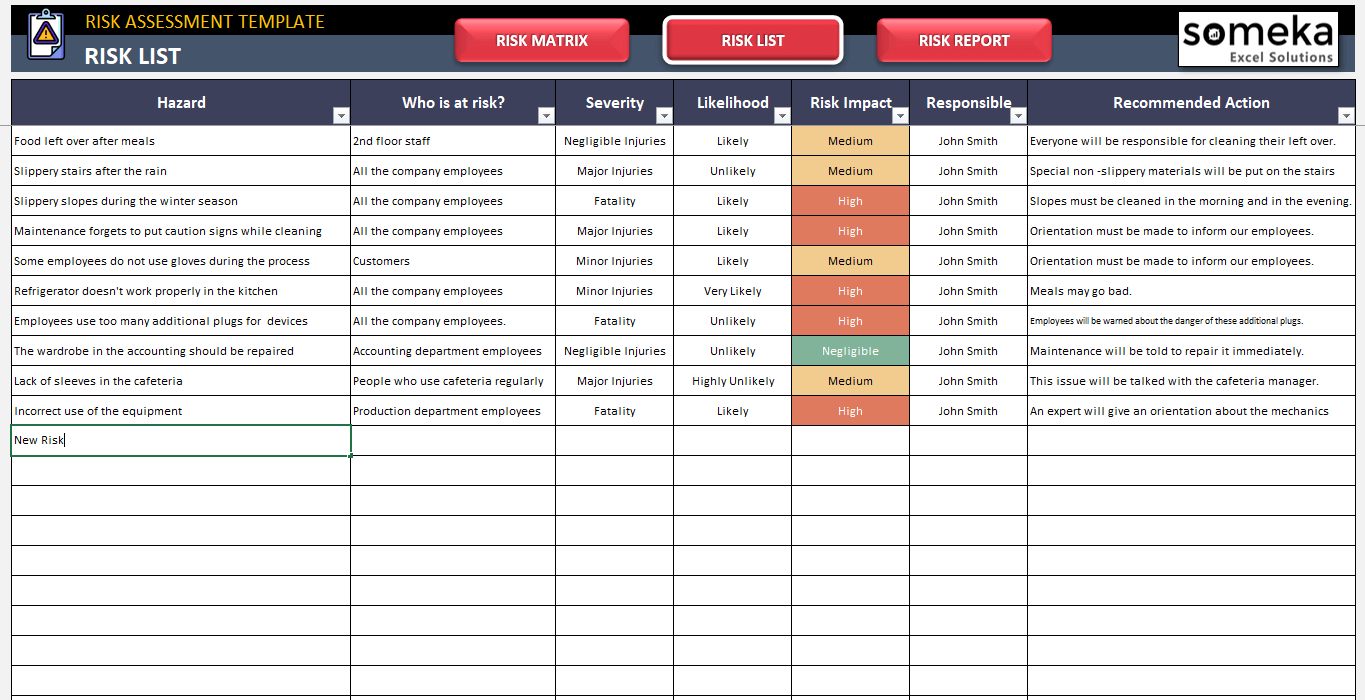 Risk Assessment Template Excel
Benefits of Using a Risk Assessment Template in Excel
1. Structured Approach: A template provides a structured framework for conducting risk assessments, ensuring that all relevant factors are considered and no important information is overlooked.
2. Consistency: Using a template helps maintain consistency in the risk assessment process, making it easier to compare and analyze risks across different projects or departments.
3. Data Analysis: Excel allows for easy data entry and analysis, enabling organizations to create charts, graphs, and pivot tables to visualize risk data and trends.
4. Documentation: A well-maintained Excel template serves as a valuable documentation tool, providing a record of risk assessments conducted and the corresponding mitigation strategies implemented.
5. Scalability: Excel templates can be easily scaled to accommodate the needs of small businesses or large corporations, making them a versatile tool for risk management.
In conclusion, using a risk assessment template in Excel can significantly improve an organization’s ability to identify, assess, and mitigate risks effectively. By leveraging the power of Excel’s features and customization options, businesses can streamline their risk assessment process and enhance their overall risk management practices.